
More Than a Product, PRC-Saltillo is Producing Life-Changing Technology
April 28, 2026
If you’ve ever heard the Wayne Economic Development Council talk about manufacturing in Wayne County, you’ve likely heard us say, “cool things are made here.” But sometimes, those “things” go far beyond products—they create connection, independence, and a voice for those who might not otherwise have one. They can truly change lives. For families and individuals navigating life with disabilities, that impact is especially meaningful, and it’s exactly the kind of difference PRC-Saltillo is making every day.
Founded in 1966 and headquartered in Wooster since 1984, PRC-Saltillo’s impact reaches around the world—and it all began in a basement in Madisonburg, with the company moving into its first facility in Shreve in 1973. Known for developing communication technology for individuals who are unable to rely on natural speech, PRC-Saltillo has grown from a small local company into a global leader in augmentative and alternative communication, or AAC. Along the way, it has remained deeply rooted in Wooster, where its culture, leadership and employee ownership continue to shape its future.
The company’s story began in 1966, when Barry Romich and Ed Prentke, both electrical engineers trained at Case Western Reserve University, founded what would become the Prentke Romich Company (PRC). Using a discarded telephone machine, they began experimenting with ways to help individuals who could not speak communicate through technology. That early effort grew into a company that would help define an entire industry.
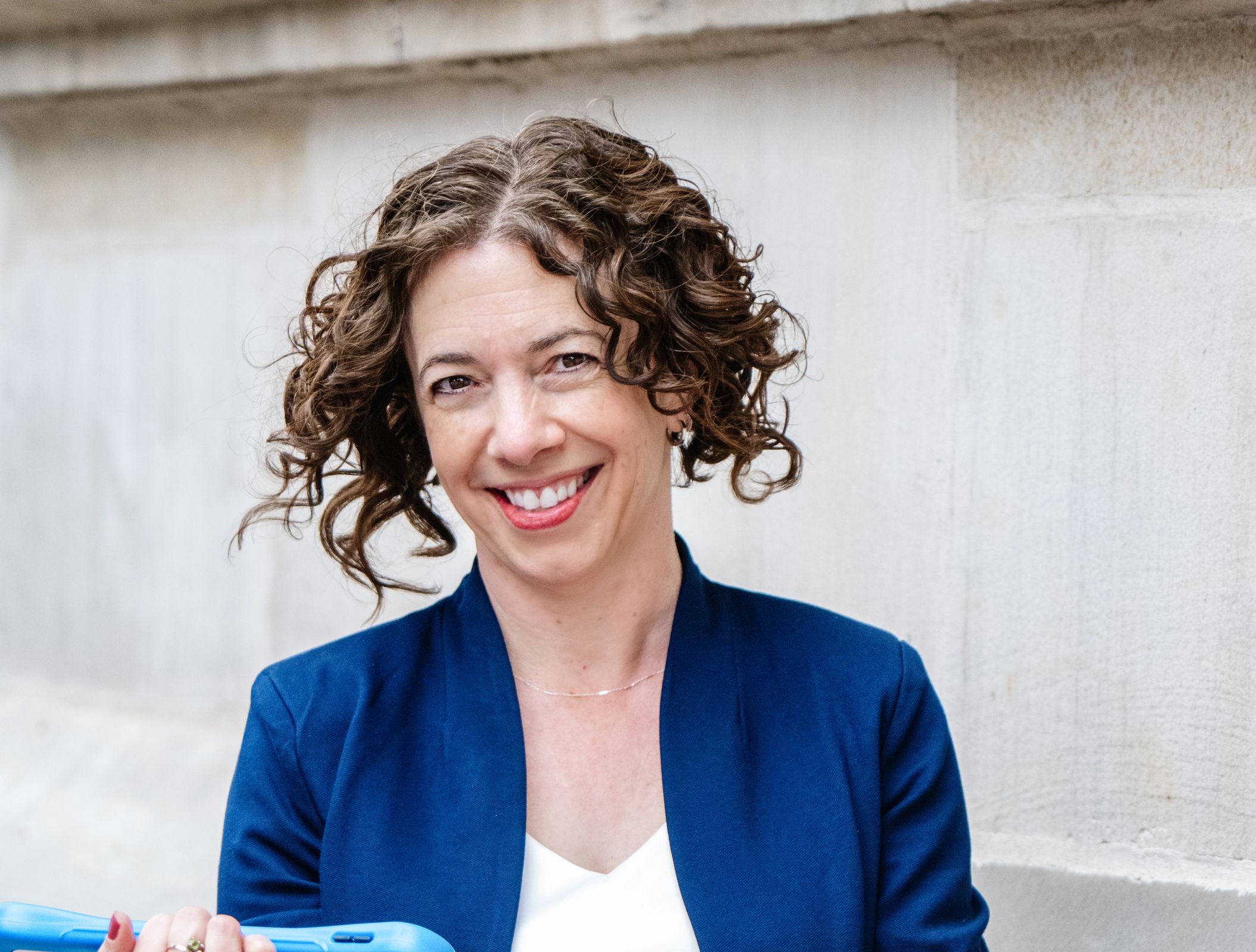
“A lot of times when I talk to AAC groups, I say the history of AAC is really the history of the Prentke Romich Company,” said CEO Sarah Wilds. “As at least one of the first AAC companies, we really helped define and shape the industry worldwide.”
A major order from the Veterans Administration in 1975 helped accelerate the company’s development efforts, and in the early 1980s, Romich and Prentke connected with linguist Dr. Bruce Baker of Pittsburgh, whose insights would help shape the future of the company’s technology.
While impressed with their work, Baker identified inefficiencies in the existing typing-based communication system. He believed that individuals with communication disabilities often also faced motor challenges, making traditional input methods difficult to use. Together, they developed a symbol-based system that uses sequences of icons to form words, known as Minspeak® (Minimum Effort Speech). This patented technology became foundational to the field, eliminating the need for literacy and prior technology experience.
In the 1990s, the strategic decision was made to utilize speech pathologists as sales consultants, ensuring users received expert guidance and support. This strategy helped build credibility with families, therapists, and schools. And then in 2000, Medicare began providing federal funding for the devices, significantly expanding access to communication technology and helped expand the field even further.
Another important chapter in the company’s history began with Dave Hershberger, who started working at PRC at just 16 years old. Encouraged to continue his education while working at the company, he later earned a degree in electrical engineering and developed an interest in building a company of his own. Having spent his entire career in AAC, it was a natural path forward.
Knowing it would create a competitor to PRC, Romich, who was Hershberger’s mentor, supported his decision, and Hershberger founded the Saltillo Corporation in the mid-1990s.
“Dave (Hershberger) had made a deal with Barry (Romich),” said Wilds. “If his new company was successful, PRC could buy him back in ten years—and if not, that was Dave’s risk.”
The two companies took slightly different approaches. PRC had built much of its work around individuals with cerebral palsy and significant motor difficulties, while Saltillo focused more intentionally on individuals who were ambulatory and using direct touch access, including individuals with Down syndrome or autism.
Saltillo proved to be successful, and in 2008, PRC acquired the company, bringing both organizations back under one umbrella. That same year, PRC became 100 percent employee-owned (ESOP), a milestone that remains central to its identity today.
Although PRC and Saltillo operated independently for several years, they formally merged in 2019 to become PRC-Saltillo, combining their strengths and expanding their impact.
Today, PRC-Saltillo employs about 360 people in the United States (220 of which are in Ohio) and around 500 worldwide. The company has long-standing subsidiaries in the United Kingdom, Australia and Germany, along with operations in Canada. More recently, it opened a new subsidiary in Singapore and acquired a company in India, further expanding its global reach.
Its communication solutions are available in dozens of languages, and the company serves children and adults with a variety of communication disabilities, including autism, cerebral palsy, genetic disorders, brain injuries, stroke-related communication loss and ALS.
PRC-Saltillo’s funded device lines are based on Windows, Android and iOS platforms and are designed to meet different communication needs. “We have three lines of primary funding, including Medicaid, Medicare and private insurance,” said Wilds. “We also have lots of different access technologies, so users may access them through touch, eye tracking, head movement or switches, depending on their physical abilities.”
Looking ahead, Wilds sees tremendous opportunity for growth, both in the United States and internationally.
“There’s estimates that as an industry, we’re meeting the needs of 10 percent or less of individuals worldwide,” said Wilds.
That unmet need is one of the driving forces behind the company’s future plans. PRC-Saltillo is working intentionally to ensure its products meet the needs of users across the full lifespan, not only in pediatric settings where the company has traditionally been strong. Continued global expansion is also a major focus, along with building expertise in engineering, languages, operations and distribution.
Even as the company grows around the world, Wilds believes that growth can continue to strengthen Wayne County. “We have this really unique opportunity in Wayne County,” Wilds said. “Even though we’re expanding globally, that also brings employees and revenue back to Wayne County.”
Wilds’ own path to becoming CEO reflects both the company’s mission and its long ties to Wooster. Originally from Illinois, Wilds came to The College of Wooster as a student and studied Communication Sciences and Disorders. During college, she completed an internship at PRC and centered her senior independent study around AAC devices.
Wilds later earned a graduate degree at Purdue and originally imagined a future in academia, but her career took a different turn after working as a pediatric speech pathologist in New Zealand.
While in New Zealand, one of the first children Wilds worked with had a PRC device, rekindling her interest in AAC and setting her on the path that would eventually bring her back to the company. Over the years, Wilds worked in clinical, consulting, training, marketing and operational roles connected to PRC, later earning an MBA to better understand the business side of the field. In 2018, Wilds moved to Wooster to help lead the Saltillo side of the business, then served in product development and as Chief Operating Officer before becoming CEO in 2025 after Hershberger retired.
Having a background in both speech pathology and business has shaped the way Wilds approaches leadership. “I like to think I lead from the intersection of a clinical and business perspective,” she said.
That perspective is especially important as PRC-Saltillo continues investing in its local facilities. A major renovation completed in May 2020 was designed for a pre-pandemic workplace, but as hybrid work changed how employees used the building and business needs shifted, the company found itself needing different kinds of space. Increased sales also meant greater need for production capacity and more room for engineering teams.
A new renovation project began in 2025 and is now in its final phase. The work includes adding more offices for hybrid employees, creating “hotel office” space, improving shared collaboration areas and making better use of formerly underused areas. The renovation is expected to be completed by mid-June.
For Wilds, the project is about more than physical updates. It reflects the company’s continued growth and professionalism. “As PRC-Saltillo grows, so does its visibility in the community,” said Wilds. “When I first moved to Wooster in 2018, many people had never heard of PRC or Saltillo. Now, it is much more common for people to know someone who works here or to recognize the company’s role in the region.”
That growing awareness has been meaningful, especially for a company whose work often stays behind the scenes until someone personally encounters the need for communication support.
Employee ownership also continues to play a key role in shaping the culture. Wilds said it gives team members across the organization a strong sense of shared purpose and responsibility, whether they work in leadership, engineering, manufacturing or support roles. “Everyone’s work contributes to the success of the company and, ultimately, to the people who rely on our products.”
The next time you hear that “cool things are made here,” you can point to PRC-Saltillo, creating technology that not only stands out, but changes lives around the world. And to think, it all started in a basement workshop in Wayne County 60 years ago.
To learn more about PRC-Saltillo, visit prc-saltillo.com.


